How to ask customers for testimonials
Updated · 7 min read · By George Ryder
Most happy customers are glad to say something nice. They just won't do it unprompted, and they won't do it if it feels like homework. Getting testimonials comes down to three things: asking at the right moment, making it take a minute, and asking questions that lead to a useful answer. Here's how to do each.
1. Ask at the right moment
The best time to ask is when the good feeling is fresh. That's usually one of these moments:
- Right after you deliver. The project is handed over, the order has arrived, the course is finished.
- When they've just praised you. A thank-you email or a happy message is a testimonial waiting to happen. Reply, thank them, and ask if you can share it.
- When a result shows up. The first booking through the new website, the tax return filed, the race finished. Results make the best testimonials.
- When they come back. A repeat order or renewal is a clear sign they're happy.
Avoid asking while a problem is still open, before the work is finished, or months later, when the details have faded.
2. Make it take a minute
Every extra step loses people. A good request:
- Is one link. No attachments, no “reply with a few paragraphs”, no account to create.
- Works on a phone, because that's where most people read your message.
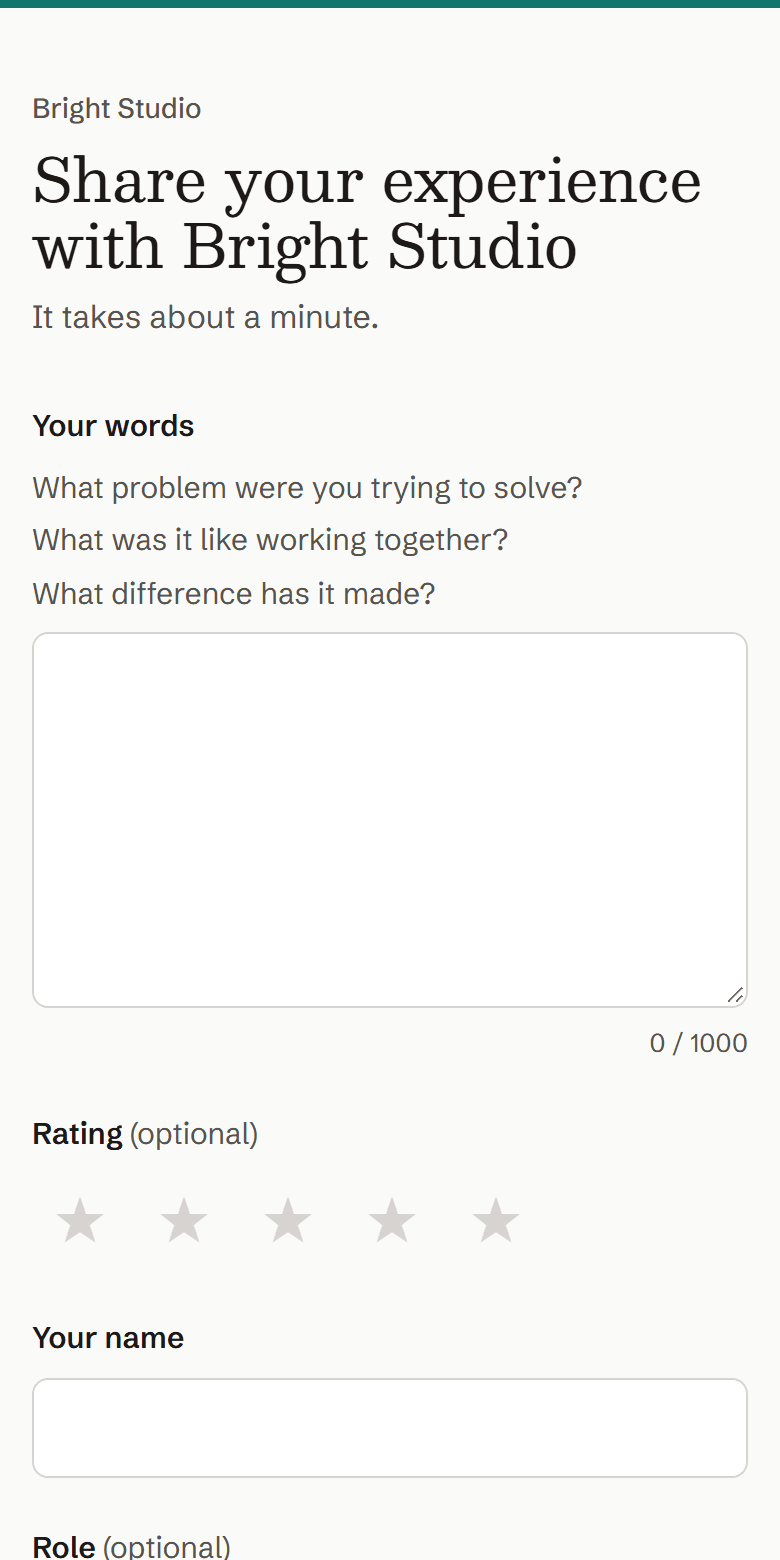
- Says how long it takes. “It takes about a minute” makes people far more willing to start.
- Gives them prompts, so they aren't staring at an empty box (see the next section).
3. Ask three questions that lead to a story
“Can you write us a testimonial?” usually gets “Great service, would recommend!”, which is kind but doesn't persuade anyone. Specific testimonials are more believable. These three prompts lead people into a short before-and-after story:
- What problem were you trying to solve? (the before)
- What was it like working together? (the experience)
- What difference has it made? (the result)
Adapt the wording to what you do. A shop might ask “What made you choose us?”, “How was the delivery?” and “How are you finding it?”. Keep it to three, and make them prompts rather than required questions.
4. Put your request where customers already are
You don't have to send a special email every time. Add your link to the places customers already see:
- Your “all done” email: add a line at the end of the message where you hand over the work.
- Invoices and receipts: “Happy with how it went? Tell us in a minute: [link]”.
- Thank-you or order-confirmed pages on your website.
- A printed QR code on a receipt, a business card or a sign by the till, for in-person businesses.
- Your email signature, so every reply quietly asks.
- A text or WhatsApp message, which often gets a faster reply than email.
Ready-made wording for each of these is in Testimonial request templates you can copy.
5. Follow up once, then stop
People mean to reply and forget. One friendly reminder three to five days later catches them, and it's often welcome. After that, let it go: a third message starts to feel like pressure, and pressured testimonials aren't worth having.
Hi [Name], just bumping this in case it got buried. If you have a minute, I'd really value a few words about working together: [link]. No worries at all if not. Thanks again!6. Ask permission and keep it honest
Testimonials only work if people believe them, and there are rules about them too.
- Get permission to publish, including their name and role. A form with a consent tick box keeps a record for you.
- Never write them yourself, or post ones from people who haven't used your service.
- Say so if you gave anything in return, such as a discount for leaving a testimonial. Better still, don't offer one.
- Only fix typos. Don't change what someone meant or stitch quotes together.
7. Use them well
- Show a name and role (“Priya N., studio owner”). Anonymous quotes are much less convincing.
- Lead with your most specific testimonials, especially ones that mention a result.
- Put them next to decisions: beside your prices, above your booking button, on product pages.
- Keep them fresh. A steady trickle of new testimonials shows the business is active.
Step-by-step help for your site builder: WordPress, Wix, Squarespace, Shopify, Webflow, Framer and Carrd.
Quick checklist
- Ask within a day or two of delivering, or right after they praise you.
- Send one link that works on a phone and takes about a minute.
- Give three prompts: before, experience, result.
- Add the link to your invoices, receipts, signature and thank-you pages.
- Follow up once, after three to five days.
- Get permission, and never write or reward testimonials in secret.
Questions
How many testimonials do I need?
Three good, specific ones are enough to start. Beyond about ten, freshness and relevance matter more than quantity, so show the ones that match each page.
What if a customer says they're not good with words?
Tell them two or three sentences is perfect, and point them to the prompts. You can also offer to write up what they said on a call, then send it to them to approve or change before you publish it.
Should I offer a discount for a testimonial?
It's best not to. Incentivised testimonials have to be disclosed, which makes them less persuasive, and in some places hiding an incentive is illegal. A sincere, well-timed ask works better.
What should I do with a negative response?
Thank them and reply privately to put it right. You don't have to publish every response on your own website, but don't present your selection in a misleading way, for example by claiming that every customer is happy.